Pen Storage 101: Pots, Trays, Cases and When to Use Each
Pens accumulate. They arrive from conferences, hotel rooms, stationery shops you only meant to browse, and the depths of bags. Within a year or two most desks have a working handful out on display and a chaotic pile somewhere else — a mug that has become a landfill, a drawer that jams when you push it shut.
Storage is not about tidiness for its own sake. A good setup keeps the pens you actually use within reach, protects the ones that matter, and makes it obvious when something needs ink, a clean or a replacement. The format matters far more than the budget: a £4 pot can be exactly right, and a beautifully made case can be the wrong answer. Here is how to pick.
Start with how often you use each pen
Sort your pens into three rough groups before you buy anything. Daily users are the two to six pens that are in your hand most weeks. Occasional pens come out for a particular task — a fountain pen for cards, a fineliner for diagrams, a red ballpoint for marking up. Everything else is archive: spares, sentimental pieces, refills you bought in bulk.
Each group wants a different home. Daily pens belong on the desk within arm's reach. Occasional pens belong in a tray in the nearest drawer, visible the moment it opens. Archive pens belong in a closed case or box, ideally labelled, stored somewhere out of direct sunlight.
The useful test is simple: if a pen hasn't been used in a month, it does not need permanent desk space. Move it down a tier and give the space to something you will pick up tomorrow. Repeat the sort twice a year and the desk rarely gets out of hand.
Pots and cups: fast access, low protection
When a pot is the right call
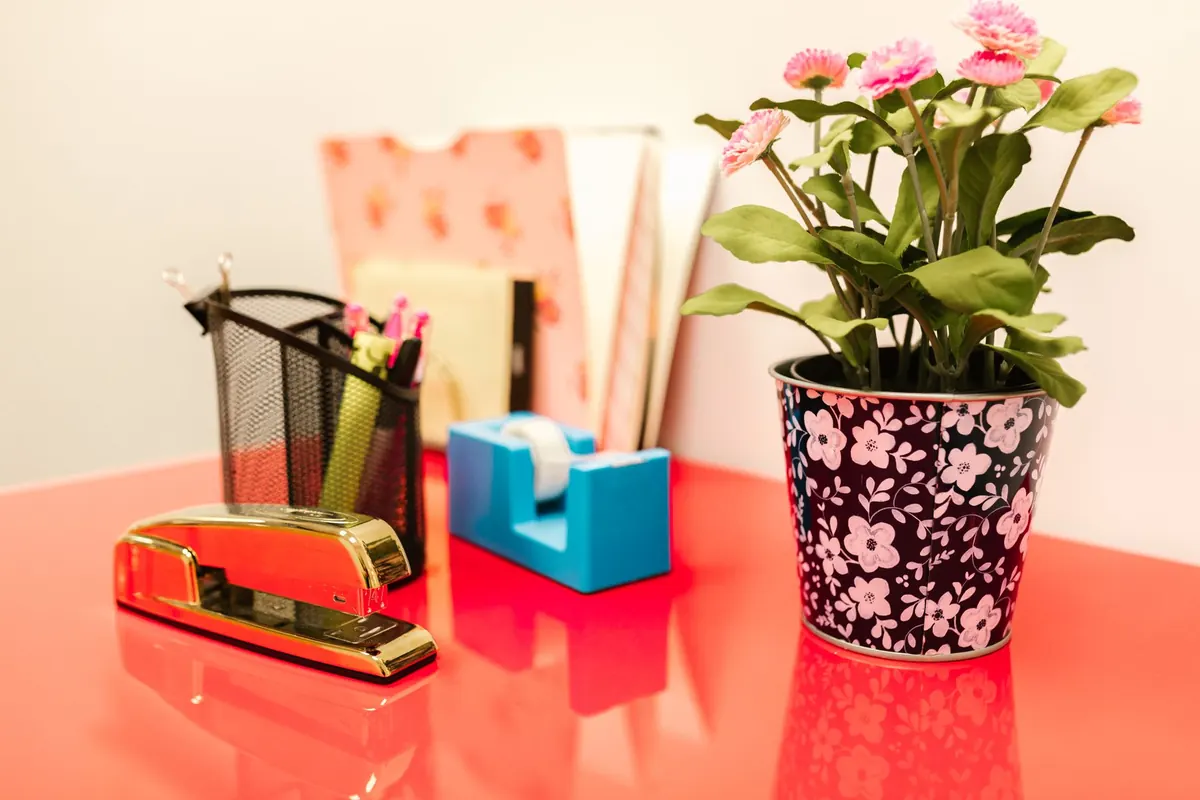
Pots suit pens with caps or retractable tips that take a bit of knocking about: ballpoints, gel pens, pencils, budget markers. They are the fastest format to use, since there is no lid to open and nothing to unclip, and they hold a variable number of pens without complaint. A weighted base or a wider footprint stops the whole thing tipping when you pull a pen out one-handed.
Choose a pot deep enough that pens lean rather than topple — around 8 to 10cm is a good working depth — and shallow enough that you can still see which is which. A third to half of each pen should sit above the rim.
When it isn't
Two situations call for something else. Fountain pens should not stand nib-down for months at a time: ink collects in the cap and the nib can dry out and clog. And any pot where pens rattle against each other will slowly mark lacquered barrels and scratch metal clips. If you keep a mixed pot, add a foam insert or a layer of glass beads to hold the pens upright and apart, and never fill it past the point where the pens stop standing on their own.
Trays: the working set, laid flat
A tray is the best format for a curated selection of five to twelve pens that you want to see at once. Lying flat, pens are separated, protected along their length and easy to identify. Felt or leatherette linings cushion finishes; grooved inserts keep individual pens from rolling into each other.
Shallow trays slide into a desk drawer and turn a jumble into something you can read at a glance. Sloped trays sit on the desk and present the pens at an angle, which suits a small desk where a pot would block the view. The trade-off is dust: open trays collect it, so expect to wipe pens down every few weeks. If a pen is going to sit untouched for a season, a closed case is the better home.
Cases, rolls and tins: for pens that leave the desk
Anything that travels needs a case. Zip cases with elastic loops hold a dozen pens securely; fabric rolls are lighter and pack flat; a rigid tube or single-pen sleeve is worth having for one good fountain pen in a bag.
Two details matter more than the material. First, loop size: elastic that grips too tightly will bend clips and press on barrels over time, so choose loops matched to your pen diameters rather than a universal size. Second, airflow. A pen that has just been rinsed and cleaned should dry fully before it goes into a closed case, otherwise damp nibs and feeds can develop mould. For the same reason, don't leave a case of pens on a windowsill or in a hot car — heat pushes ink out of feeds and into caps.
Matching the format to the pen
- Fountain pens: horizontal in a tray or looped in a case, out of direct sunlight. Keep inked pens in rotation and flush them before long storage.
- Rollerballs and gel pens: a tray or a pot with the cap on. Gel ink dries quickly if a tip is left exposed, so these are poor candidates for an open pen stand.
- Ballpoints: the most forgiving of the lot. Pots, drawers and gloveboxes are all fine — just retract the point.
- Fineliners, markers and brush pens: store horizontally as a safe default so ink doesn't drain to one end. If a brush pen starts to feel dry, resting it tip-down for a few minutes often revives it.
- Pencils and mechanical pencils: any format works, but keep them out of deep pots shared with heavy metal items, where leads snap.
- Dip nibs and spare nibs: keep them dry in a small tin, away from moisture.
Fitting the storage to the desk you have
On a narrow desk, go vertical or go flat: a single weighted pot, or a slim tray tucked behind the keyboard. On a larger desk, a tray for the working set plus one small pot for pencils and a ruler covers most days. If you share a desk or work from several places, choose a case that closes, so packing up takes seconds and nothing is left behind.
The one rule that applies everywhere is restraint. Storage that is exactly full is storage you will stop using. Leave a quarter of every pot, tray and case empty, and you will always have somewhere to put the pen in your hand.
Setting it up in ten minutes
- Empty everything onto the desk and wipe each pen.
- Bin the dead ones and set aside refills in a single small box.
- Pick the daily users — no more than six — and put them in your chosen on-desk format.
- Move the occasional pens into a drawer tray.
- Put the archive into a closed case, label it, and store it away from sun and radiators.
- Clean one fountain pen while you are at it, and let it dry before it goes back.
Do that once, then repeat the sort when the desk starts to feel crowded. The pens you like will be the ones you reach for, and the rest will be safe, findable and out of the way.
Photo: RDNE Stock project / Pexels