How to Organise a Small Home Office Desk in a UK Flat
A desk in a flat is rarely just a desk. It might be squeezed beside a wardrobe, tucked under a window that never quite closes, or in the corner of a living room that has to work as an office by day and somewhere to eat by night. The answer isn't more storage. It's deciding what each centimetre of the surface is for, then building upwards instead of outwards.
This is a layout you can copy in an afternoon, using things you probably already own.
Measure before you move anything
Before you buy a single box, write down four numbers: the desk's width, its depth, the height of the underside (so you know what fits beneath), and the distance from the front edge to the nearest wall socket.
Depth is the number people forget. Many desks sold for small rooms are only 40–45cm deep, which is fine for a laptop and a mug but not much else. Anything wider than a sheet of A4 sitting along the back edge is stealing working space. Measure that back strip, and treat it as a shelf rather than a surface.
Then check the room itself. Can the chair slide back far enough to stand up without clipping a bed or a door? Is there a radiator under the window pushing warm air at your knees? Would a shelf above the desk clash with a curtain rail? Five minutes with a tape measure saves an afternoon of shifting furniture twice.
Divide the desktop into three zones
A tidy desk isn't an empty desk. It's one where everything has a predictable place, so your hands can find it without your eyes searching.
The centre: working zone
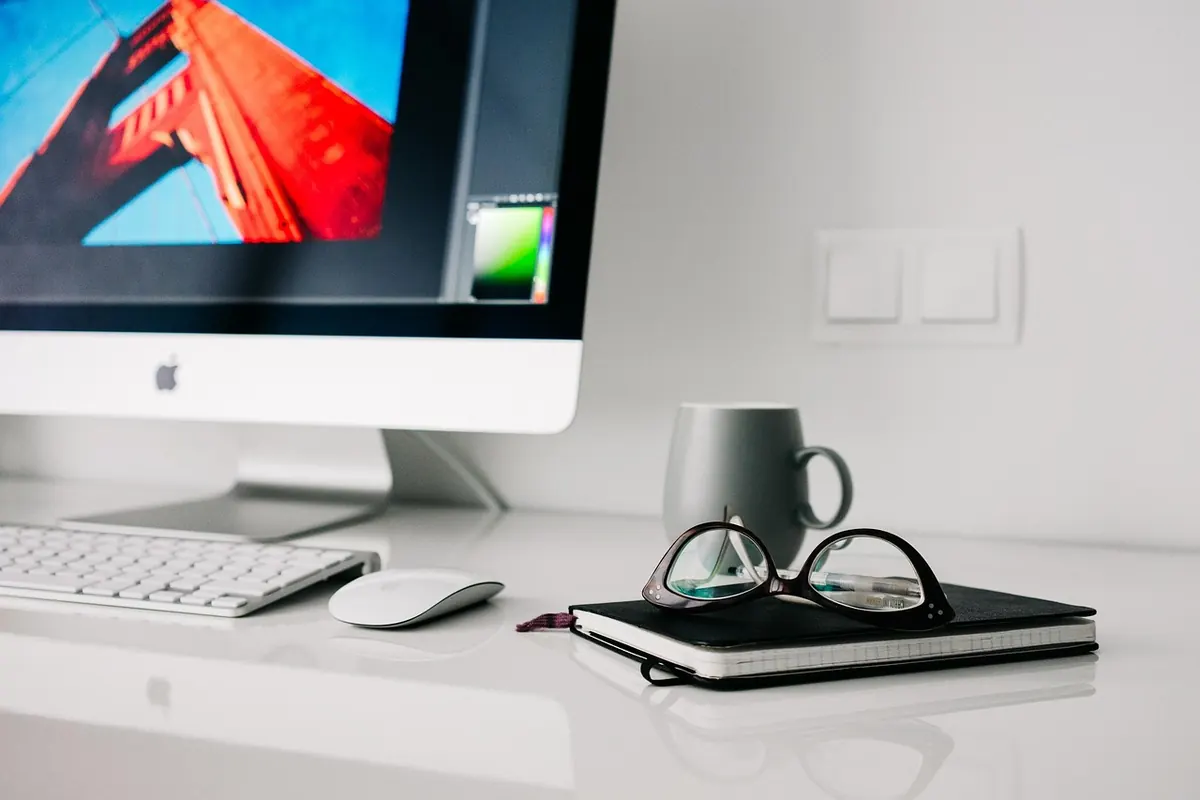
Keep roughly 60cm in the middle clear for the thing you actually type on, plus the notebook you write in. Nothing else lives here — no pen pots, no coffee cups parked permanently, no decorative objects. If you use an external monitor, raise it so the top of the screen sits around eye level, and push it back towards the wall.
The sides: reach zone
Your dominant-hand side holds what you touch constantly: mouse, a single pen pot, phone on charge. The other side takes what you touch often but not constantly — a shallow tray for today's papers, a small notebook, headphones on a hook. On a narrow desk the mouse often has to sit slightly forward rather than fully to the side, so leave that corner free.
The back edge: storage zone
This strip belongs to things you look at rather than handle: lamp, router, a plant, a riser. Anything you have to move out of the way before you can start work should not be here.
Go vertical: the move that buys back space
When the desktop is full, most people buy a bigger desk. In a flat, the wall is the better real estate. A few options that suit rented rooms as well as owned ones:
- A wall shelf or two above the desk, at least 45cm up so you can still see your papers. Brackets if you can drill; wide adhesive strips or tension rods if you can't.
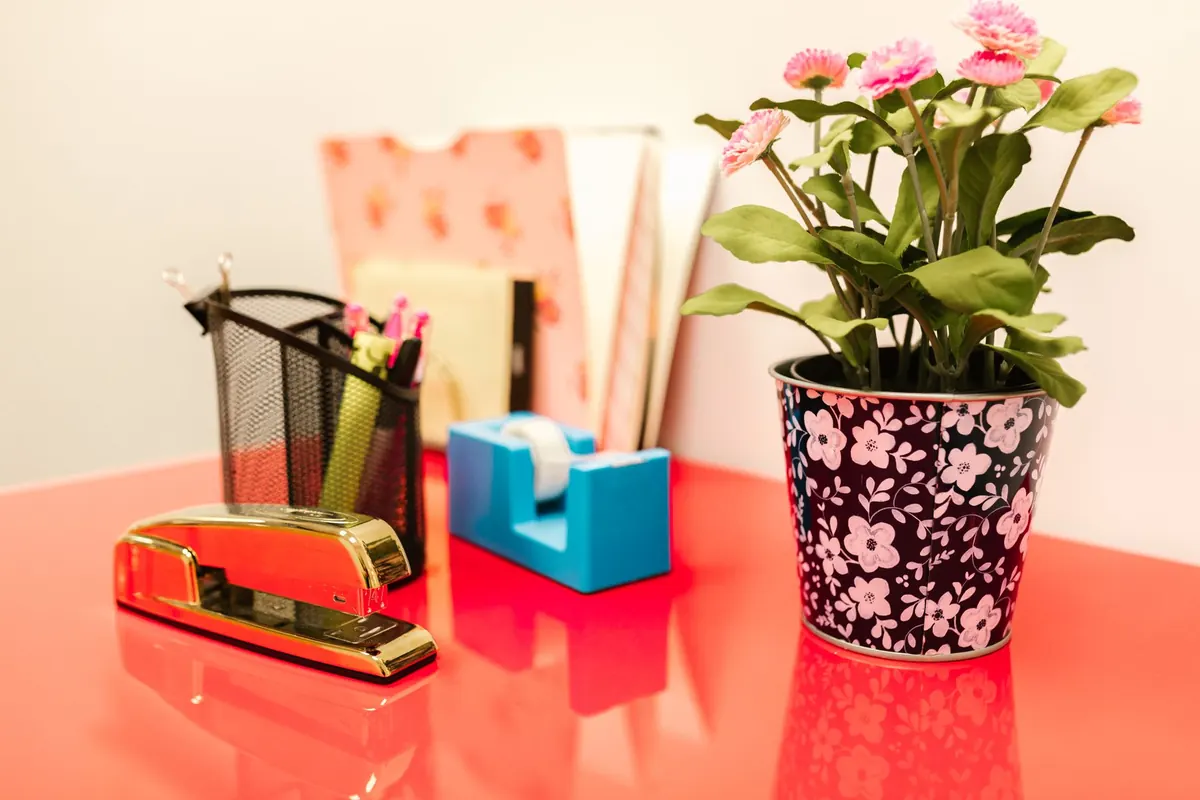
- A monitor riser with drawers — it lifts the screen to a better height and hides pens, cables and a stapler underneath.
- A pegboard or slatted panel for scissors, tape, a ruler and spare cables, mounted or simply propped against the wall.
- Wall pockets or a slim file for A4 paperwork that would otherwise colonise the surface.
- A narrow trolley beside the desk, a shade lower than the desk edge, for a printer, reference books or a drawer of chargers.
One rule for all of it: nothing should overhang so far that you knock it, or your head, when you stand up.
Cable control in four steps
Cables are what make a small desk feel chaotic, and they are the cheapest thing to fix. Work in this order:
- Unplug everything and start again. Pull the desk out, dust the skirting board, then plug items back in one at a time — only the ones you genuinely use.
- Group by route. Anything going to the same place, whether that's the floor, the wall socket or the laptop, travels together as one bundle.
- Fix the bundle. Self-adhesive clips, hook-and-loop ties and a length of trunking under the back edge keep cables off the floor and out of sight. Leave a little slack where things need to move.
- Label the awkward ones. A strip of masking tape and a pen on each plug saves ten minutes of guesswork later.
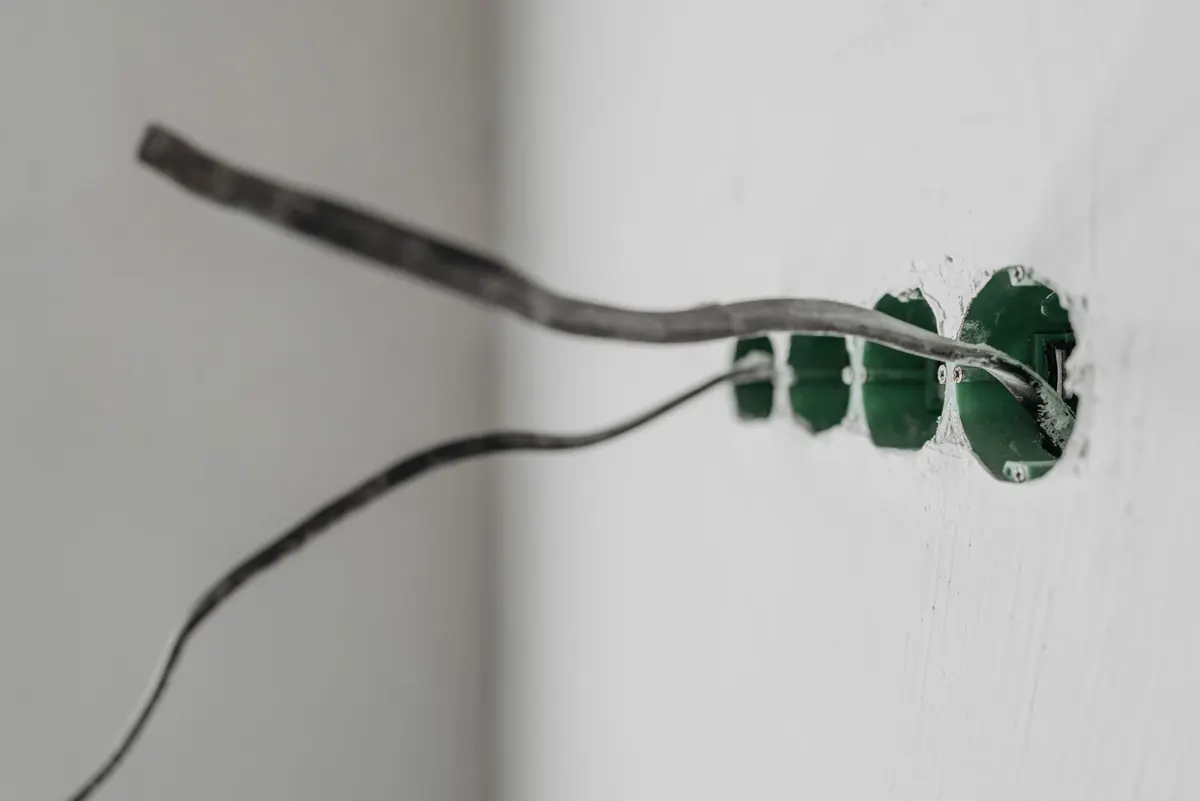
Keep it safe as well as neat. Don't chain extension leads into one another, don't overload a single socket, and don't run cables under a rug or across a doorway where they'll be walked on. If you need extra sockets fitted, that's a job for a qualified electrician rather than a DIY afternoon.
Give the small things small homes
Clutter on a compact desk is usually a storage problem, not a discipline problem. Shallow drawer dividers stop pens, clips and cables tangling. A single A4 tray holds papers that are genuinely in progress. A lidded box takes the things you need once a month — spare batteries, a USB stick, stamps — off the surface entirely.
If your desk doubles as the place where keys, wallet and post land, give that habit a home too: one small tray at the edge, emptied every evening. Containing the habit is easier than fighting it.
Ask of every object: did I use this in the last week? If not, it belongs in a drawer, on a shelf, or in a box under the bed.
A five-minute reset before you stop for the day
The layout only holds if it's easy to restore. At the end of each working day, take five minutes: cups to the kitchen, papers into the tray, pens back in the pot, cables tucked away, chair pushed in. Tomorrow then starts with a clear surface instead of a job.
Once a week, spend fifteen minutes on the drawer and the shelf above the desk. Bin the receipts, file the paperwork, put the stray charger back with its friends. Small desks stay workable not because they're perfectly organised, but because they're reset often.
Photo: fancycrave1 / Pixabay