Desk Organisers vs Drawer Dividers: Which Is Right for Your Workspace?
A tidy desk rarely comes from willpower. It comes from deciding, in advance, where each thing lives. Two pieces of kit do most of that work: the open desk organiser that sits on your surface, and the drawer dividers quietly holding everything underneath it. They solve different problems, and buying the wrong one is why so many tidy-up attempts stall by the second week. Here is how to work out which one your workspace actually needs.
The Real Difference: Surface Control vs Hidden Storage
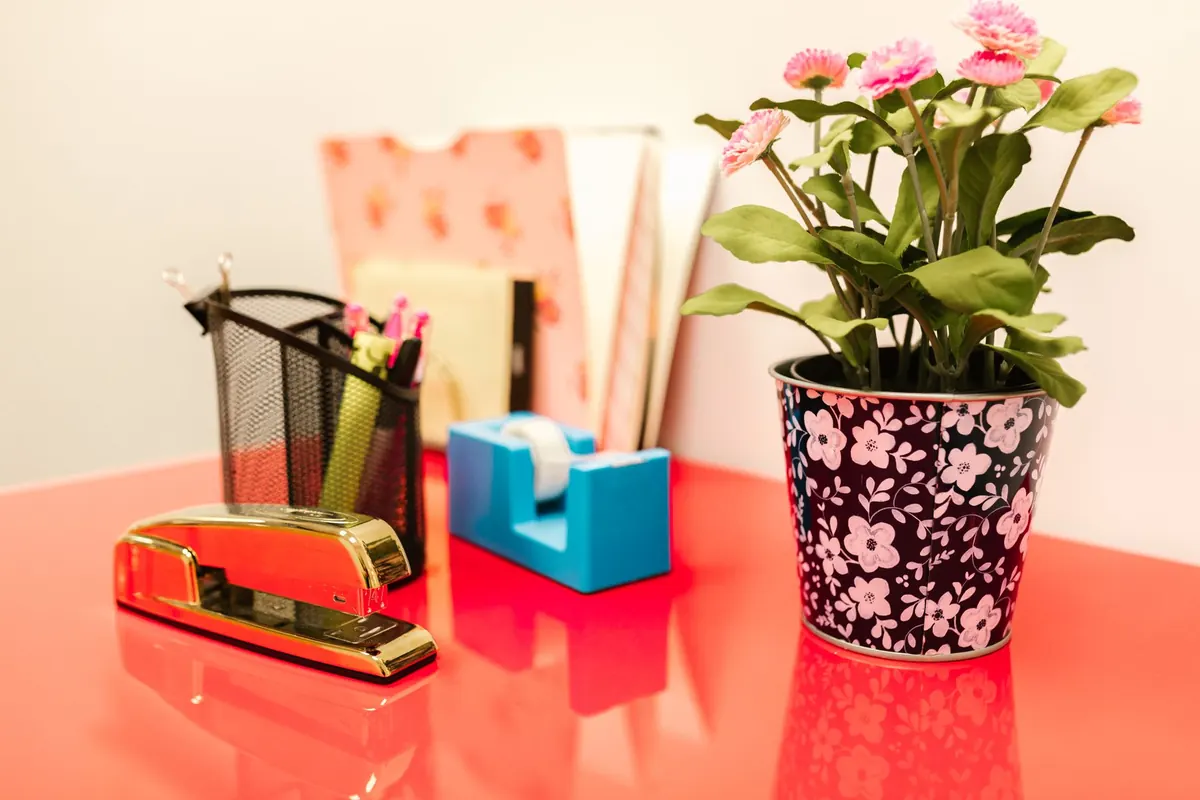
An open organiser is a workbench. It keeps the things you touch constantly within arm's reach: a pen, a notebook, your phone, the cable you plug in every morning. Because everything is visible, you use it. Because everything is visible, it also collects things that should live elsewhere.
Drawer dividers are a filing system. They take roughly the same volume of stuff and remove it from view — ideal for anything you need but don't need to look at. Spare cables, staples, ink refills, sticky notes, batteries, the charger for the device you use twice a month.
Neither option is tidier in the abstract. The question is whether the item in your hand deserves to be on show.
Match the Tool to the Clutter
Start with a sort. Walk around your desk and split everything into two piles: things you touched this week, and things you didn't.
What earns a place on the desk
- The pen you actually write with — not the eleven you're testing
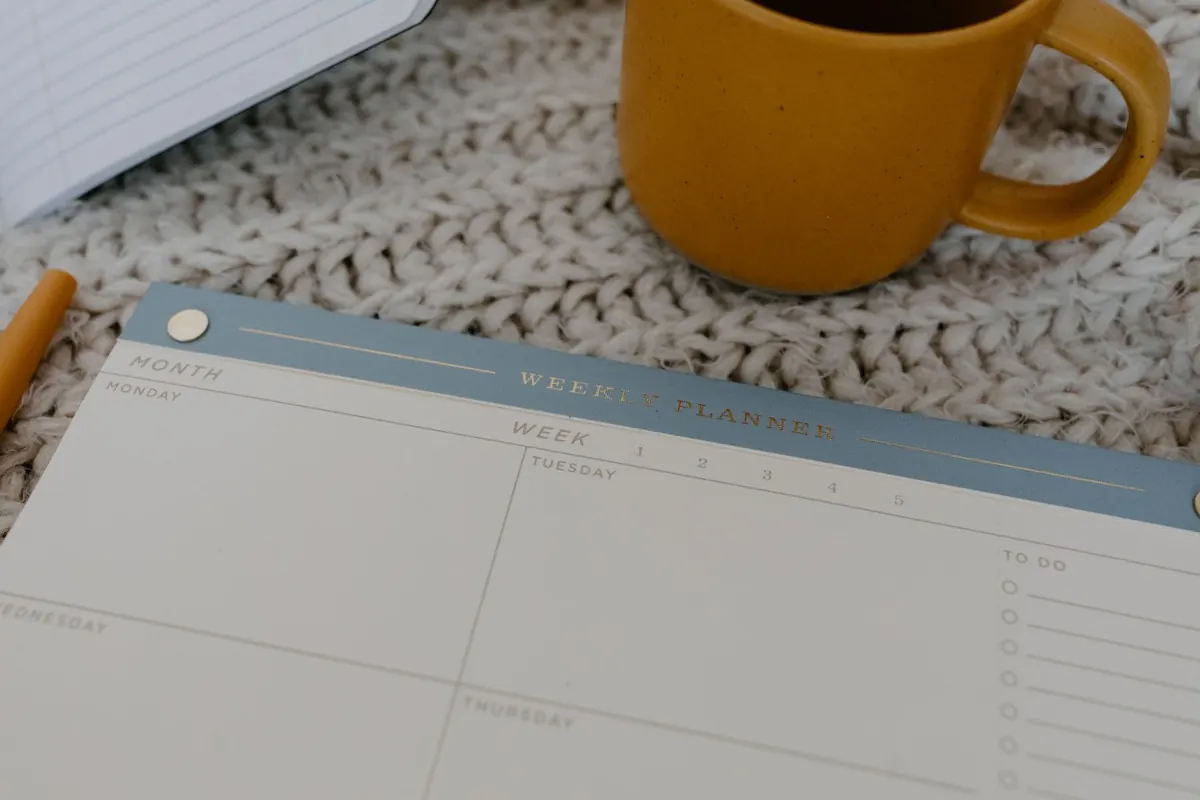
- Your current notebook or planner
- Phone, headphones or earbuds in daily use
- One charging cable, not a nest of five
- Paperwork for today's task, and nothing else
- A small tray or pot for keys, coins and a hair clip
What belongs in a drawer
- Spare stationery, refills and ink
- Cables and adapters you don't use weekly
- Batteries, envelopes, stamps and labels
- Backup notebooks and bulk sticky notes
- Anything that would need dusting if it sat out
If most of your clutter falls into the second list, drawer dividers will do more for your desk than any organiser will. If your daily tools have nowhere to land, an organiser is the fix.
Space: What Your Desk and Drawers Can Actually Take
Measure before you buy, and measure the drawer interiors rather than the outside of the unit. A few snags catch people out constantly.
Desk depth matters more than width. On a shallow desk — around 50cm front to back — a large tiered organiser can swallow the space your keyboard and forearms need. A low, wide tray usually works better than a tall tower.
Drawer height decides everything. Shallow drawers of 5cm or so suit dividers for pens, clips and small tools. Deeper drawers can take stacked trays, but only if the runners allow the drawer to close with the tray inside.
Drawer shape counts. A wide, shallow drawer with adjustable slot dividers stays useful for years. A narrow, deep drawer filled with fixed inserts tends to become a bin.
Check the back of the desk. If an organiser sits against the wall, make sure it doesn't block sockets or the cable you need to reach behind it.
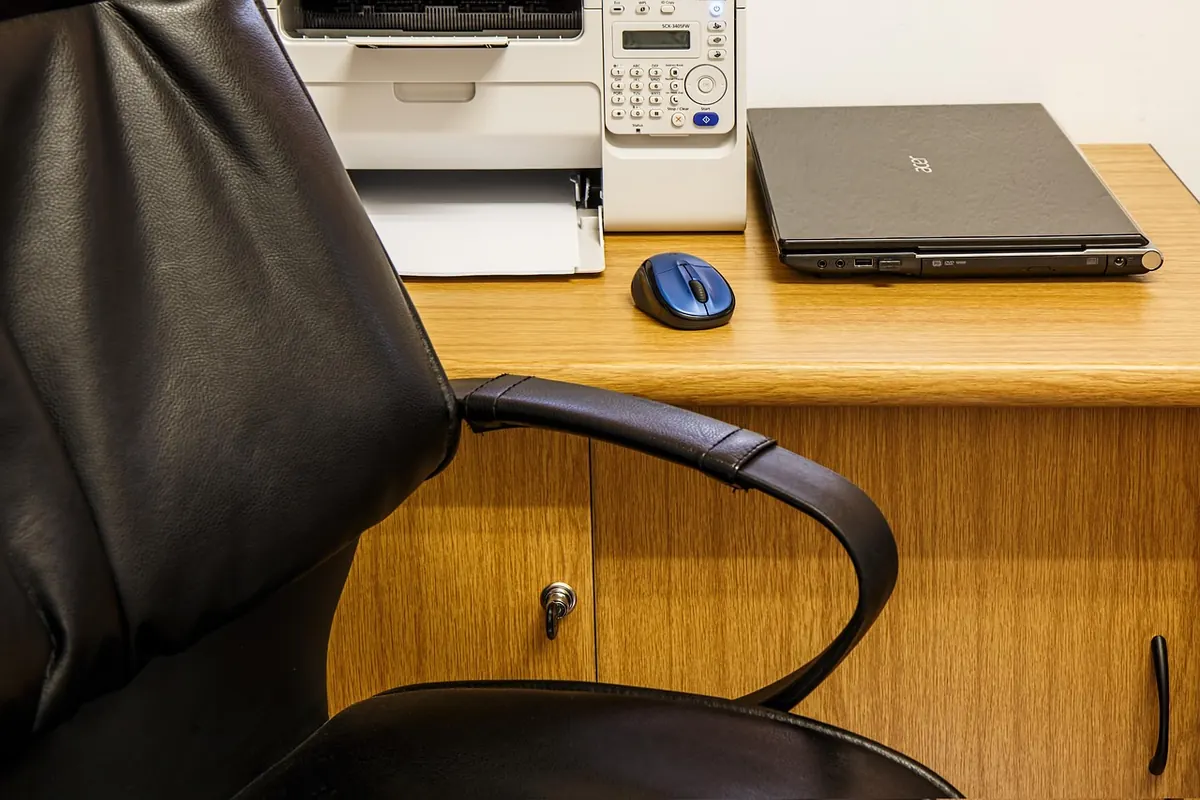
One more consideration: if you share a desk or work from a kitchen table, drawer dividers may be the only option that survives, because the surface has to clear at the end of the day.
Daily Use: The Reach Test
Think in terms of reach rather than category, and divide your workspace into three zones.
Primary zone — within a forearm's length while you're sitting. This is where the open organiser belongs, holding only what you touch most days.
Secondary zone — a stretch or a stand away. A shallow tray or a top drawer suits items you use a few times a week.
Archive — everything else. Lower drawers, boxes, cupboards, the loft.
If you find yourself standing up to fetch something several times a day, it's in the wrong zone. If something is within easy reach but you touch it once a month, it's occupying prime space. That two-way test sorts more arguments than any amount of reorganising.
The second test is reset time. A good setup takes about a minute to put back at the end of the day. If restoring order takes five, you've added too many open containers to fill.
Choosing When You Can Only Have One
Choose an open organiser if: your clutter is low volume but high frequency, your desk has few or no drawers, or your drawers are already full of non-desk things such as clothes, paperwork or charging cables.
Choose drawer dividers if: your clutter is high volume, mostly spares and duplicates, you find visual mess distracting while working, or the desk has to be cleared and used for something else.
For most people the honest answer is that one of these jobs is bigger than the other. Fix the bigger one first. Buying both at once usually means two half-empty containers and a desk that looks no better than before.
Three Mistakes That Waste Money
- Buying the container before the sort. You can't size a home for things you haven't counted.
- Treating the drawer as a bin. Dividers only help if each section holds one clear category. A four-compartment insert packed with random objects is just a tidier-looking mess.
- Choosing looks over dimensions. A beautiful organiser that overhangs your desk or blocks a socket will be resented within a fortnight.
Start Here: A Ten-Minute Sort Before You Buy
- Clear the desk surface completely — floor, bed or a spare table will do.
- Put back only what you've used in the past seven days.
- Group the remainder into categories: cables, stationery, paperwork, odds and ends.
- Measure your desk depth, then measure the inside of your drawers — height, width and depth.
- Match each category to a zone, then buy one item. Live with it for two weeks before adding anything else.
Nine times out of ten, the right answer is the option that matches where your clutter currently piles up, not the one that looks best online. Deal with the pile you can see and the drawer will take care of itself. Deal with the drawer first and the pile will simply grow back.
Photo: stevepb / Pixabay