The 10-Minute End-of-Day Desk Reset Checklist
Somewhere between the last email of the day and switching off the lamp, most desks quietly fall apart. A mug, three pens without lids, a receipt, a cable that has drifted across the surface for no clear reason. None of it is a disaster on its own, but together it makes the next morning feel heavier than it needs to.
Ten minutes at the end of the day is enough to stop that. Not a deep clean, not a filing marathon — just a short, repeatable routine that clears the surface, puts the stationery back and leaves tomorrow's first task in plain sight.
Before the timer starts
Set a timer for ten minutes. That single act does most of the work, because it gives you permission to be quick and to stop. A reset that runs to forty minutes is a project, and projects get postponed.
Have three destinations ready before you pick anything up: where it lives, tomorrow's tray, and the bin. Almost everything on a desk belongs in one of those three places, and deciding that in advance saves the small, draining pause of wondering what to do with a stray bulldog clip at six o'clock.
The shape of the routine looks like this:
- Minutes one to three: clear the desktop and wipe it down.
- Minutes four to five: deal with paper, post and receipts.
- Minutes six to seven: return stationery and tidy cables.
- Minutes eight to nine: write tomorrow's short list.
- Minute ten: bin, lamp, one nice thing.
Minutes one to three: clear the surface
Start with the largest area, not the tidiest. Take everything off the desk that does not earn its place there: the monitor, keyboard, lamp and mug can stay, and the rest goes into one of your three destinations. Work in handfuls rather than item by item, and resist the urge to sort as you go. Sorting is tomorrow's job.
Then wipe the surface. A dry microfibre cloth for screens and a barely damp cloth for the desktop is plenty. Keep liquids well away from keyboards and ports, and never spray cleaner directly onto a screen — spray the cloth, then wipe the screen.
Minutes four to five: paper, post and receipts
Paper is where a desk reset usually stalls, because paper invites decisions. So make only two. Does this need something from me? If yes, it goes in tomorrow's tray with the action written on it. If no, it goes in the bin or a slim "to file" folder.
Open the post, bin the envelopes, and note anything with a deadline in your calendar or notebook straight away — a bill, a renewal, a form to sign. Receipts go in one envelope or one drawer, not loose on the desk. Proper filing belongs in a weekly session, when you have more patience for it.
Minutes six to seven: stationery and cables
Gather every pen, pencil, marker and highlighter on the surface. Cap them, test the ones you are unsure about on a scrap of paper, and put the dead ones in the bin rather than back in the pot. What stays on the desk should be what you actually reach for: one pen you like, a pencil, perhaps a marker.
The rest goes back where it belongs. A small drawer insert or divided tray turns this into a five-second job rather than a five-minute one:
- Pens and pencils in the pot, spares in the drawer.
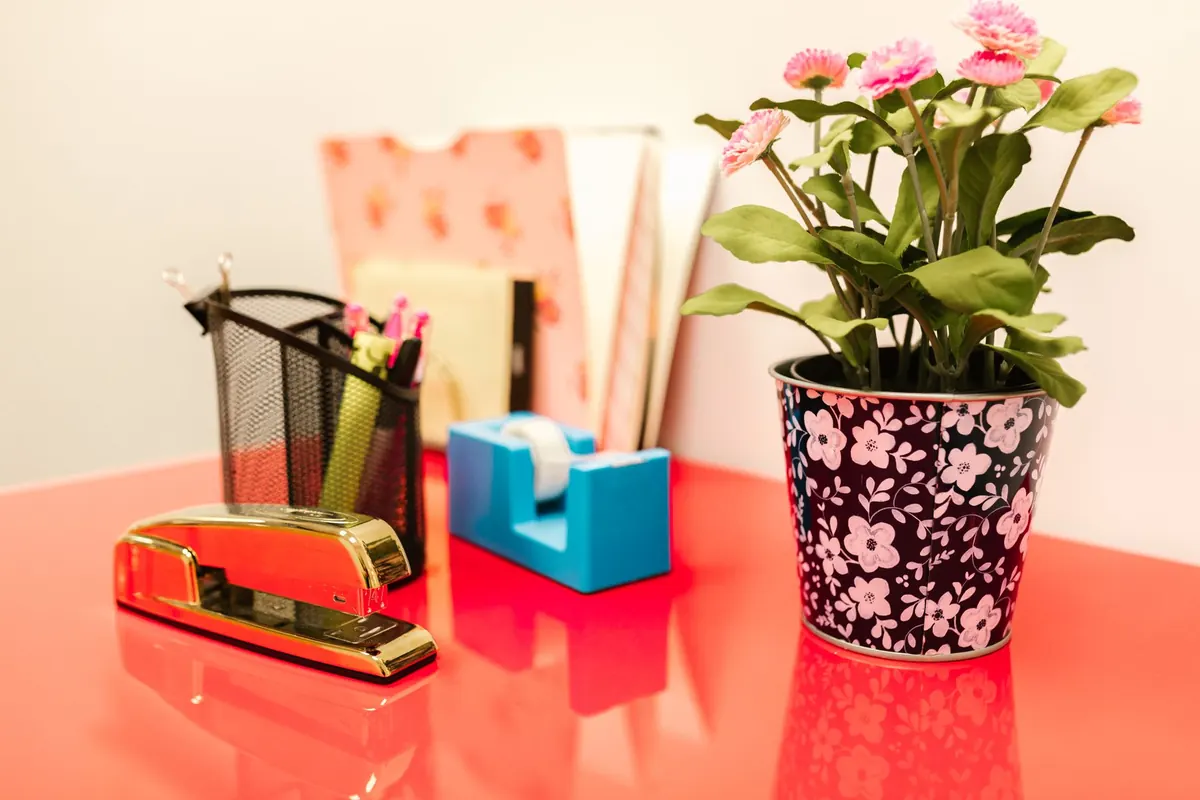
- Scissors, stapler, tape and ruler together in one place.
- Chargers and cables coiled loosely, tied, and put away. Never wrap a cable tightly around a plug — it strains the connection inside.
- Sticky notes, clips and rubber bands in a small tray, not scattered across the desk.
Cables deserve a moment of their own. If the area behind your monitor is a permanent tangle, untangle the worst of it and clip the loose ends together. Tomorrow's version of you should be able to plug something in without swearing.
Minutes eight to nine: set up tomorrow
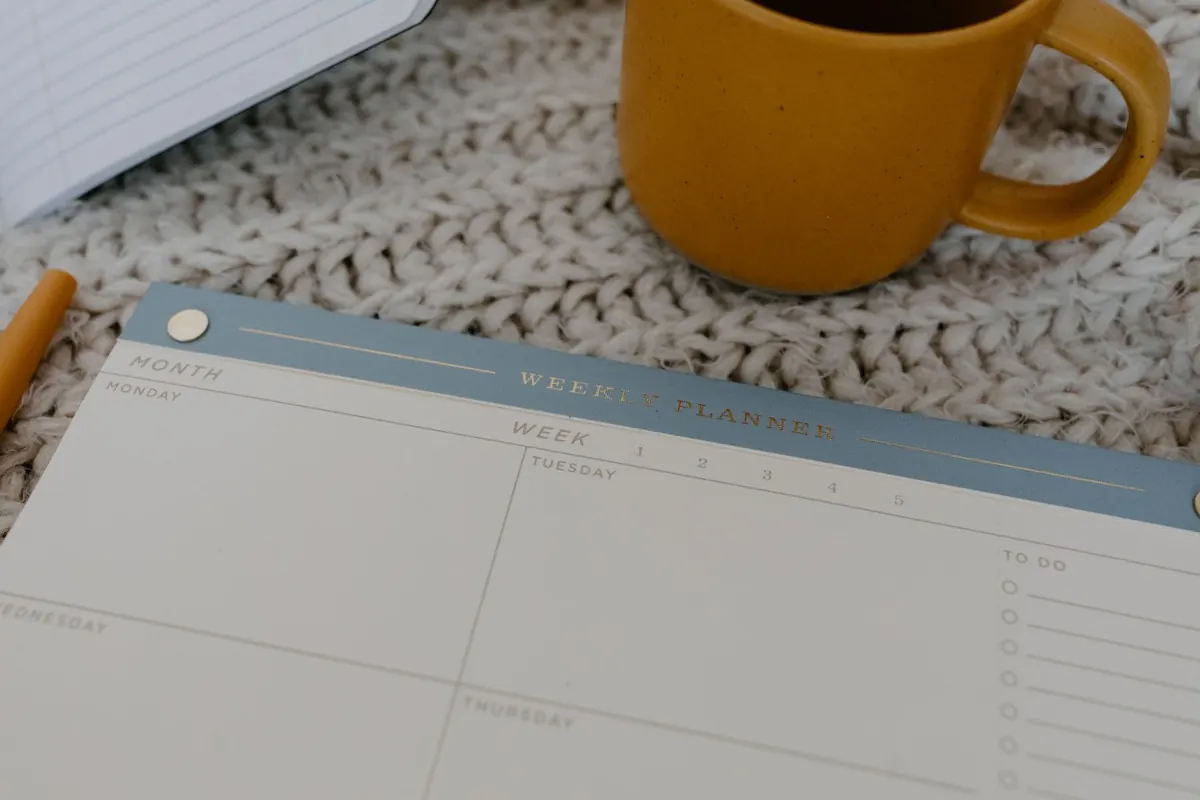
This is the part that earns the routine its keep. Before you leave the desk, decide what tomorrow looks like — not the whole day, just the first hour. Write three tasks on a card or sticky note and leave it on the keyboard, where you cannot miss it.
Three is the right number. A list of eleven things is a list of nothing, because it gives you no obvious place to start. Make the top one small and specific: "Draft the reply to Sam" beats "deal with emails". If a task needs a document or a phone number you do not have to hand, note that now, so you are not hunting for it at nine in the morning.
Minute ten: the finishing touches
Empty the bin if it is full, take the mug to the kitchen, and move the phone charger off the desk to wherever you charge overnight. Then do one small thing that makes the desk pleasant to return to: straighten the lamp, put a fresh page in the notebook, water the plant if it needs it.
Switch off what can be switched off. A dark, quiet desk is a far better invitation to sit down than one still glowing at midnight.
Making it stick
Routines survive by attaching to something you already do. Pair the reset with the last cup of tea of the day, or with shutting down your computer, and it stops being a decision you have to make each evening.
Two other things help. Keep a single "strays" tray for anything you cannot deal with in ten minutes, so small unknowns do not spread across the surface. And once a month, give the desk twenty minutes instead of ten and do the jobs the daily reset skips — emptying the pen pot, sorting the paper tray, wiping down the shelf.
A desk that is ready before you are
Ten minutes is not much. It is one episode of something, half a phone call, the time it takes to boil pasta. Spent on your desk, it buys a morning where the first thing you do is work rather than tidy, and where the task you have been avoiding is already written down and waiting.
Start tonight. Set the timer, pick up the mug, and see how far you get.
Photo: dada _design / Pexels